

Seamen (Nolimit City): mechanics, triggers and risk profile — what to know before playing a high-volatility title
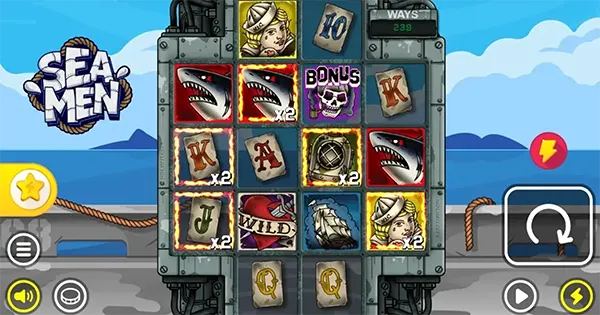
Seamen is one of Nolimit City’s “classic” high-volatility releases, launched in August 2025, and it was built to create sharp bankroll swings rather than steady, low-stress sessions. The game uses a compact 4-reel layout with a 3–5–5–3 grid and a ways-style payout structure that is commonly listed as 225 or 270 ways, depending on how a review source counts the active symbol paths. On paper, the headline numbers look familiar for Nolimit City: maximum win up to 20,000x, and a top RTP configuration around 96.04% (with lower RTP settings also existing in some casino configurations). In practice, Seamen is defined by chained respins, escalating position multipliers, and bonus rounds where multipliers can persist and stack, which is exactly why it earns its “high risk” label.
Core setup: layout, RTP reality, and what “high volatility” means here
Seamen runs on a 4-reel grid with uneven rows (3–5–5–3), and wins are paid by ways rather than fixed paylines. Most reference sources list the game at around 96.04% RTP at the highest setting, but it is important to know that Nolimit City commonly provides multiple RTP configurations to operators, and Seamen is no exception. That means the same game can be offered at a lower RTP in some casinos, even though the mechanics remain identical. If you care about long-term expected return, it is worth checking the RTP information inside the game help menu before you commit to meaningful stakes.
The volatility profile is where Seamen becomes very specific. “High volatility” here isn’t just marketing language — it shows up as long stretches of small or zero returns, followed by rare spikes when multipliers, respins and bonus spins line up. Several independent slot databases and reviews also cite concrete frequency markers: free spins are often estimated at around 1 in 263 spins on average, and larger “headline” hits (for example 100x or more) are far less frequent. These figures can vary by session, but they match what many players experience: the game can feel quiet for a long time, then suddenly erupt when a chain mechanic lands at the right moment.
The maximum win cap is typically listed at 20,000x stake. That number is meaningful not only because it sets the ceiling, but because it hints at how the game is engineered: Seamen is built for multiplier accumulation and feature layering rather than frequent medium-sized wins. For players, this translates into a simple truth: if you approach it with a casual “few spins for fun” mindset, you may see very little. If you approach it with a disciplined budget and accept the possibility of dead spins, the game’s design starts to make more sense.
Risk profile in practice: who it suits, and who should avoid it
Seamen suits players who actively choose high-volatility slots and understand what they are buying into: long dry spells, irregular hit distribution, and the need for a bankroll that can handle repeated non-winning stretches. This title is not designed to “tick over” smoothly. Its best moments often come after the game has built up multipliers over several respins or inside a bonus round where persistent values can carry forward.
If you are a player who prefers stable entertainment value, or you get frustrated when a slot produces long sequences without meaningful returns, Seamen can feel punishing. The design leans into risk and the psychological pressure that comes with it. Even with a strong RTP setting, your session results can be negative for a long time before a feature sequence changes the outcome.
From a responsible-play point of view, the safest approach is to treat Seamen as a “set a limit and stick to it” slot. Because the pay curve is spiky, it can easily encourage chasing behaviour — especially after you’ve seen small hints of potential through multipliers or near-misses on bonus triggers. If you do not enjoy that dynamic, it’s better to pick a medium-volatility title and keep Seamen for occasional, deliberately budgeted sessions.
Main mechanics: Win Respins, Fire Frames, and multiplier progression
The backbone of Seamen is the Win Respin concept. In simplified terms, a winning spin does not just pay and end; it can clear winning symbols, trigger a respin, and allow the grid to refresh while keeping certain built-up advantages. This design is a classic Nolimit City approach: it creates the chance for a chain reaction rather than isolated wins. The important detail is that the best returns typically come when respins continue long enough for multipliers to grow and for additional modifiers to attach to the grid.
Fire Frames are another core layer. They function as special framed positions that can influence the behaviour of respins and multiplier build-up. Sources describing Seamen consistently mention that new Fire Frames can be added during chains, which increases the game’s capacity to “ramp up” when it is in a hot streak. The downside is obvious: outside those streaks, the game can look flat, because the real edge comes from stacked states rather than ordinary base gameplay.
Position multipliers are central to the identity of Seamen. Rather than using a single global multiplier, the game often builds multipliers tied to specific positions, which means that where symbols land matters just as much as what symbol lands. When a multiplier-heavy position lines up with a strong symbol and a continued respin sequence, the game can jump from modest wins to serious payouts very quickly — and that jump is exactly why the title’s risk profile is so extreme.
Bomb symbols and symbol behaviour: why “one good sequence” changes everything
Many Seamen summaries mention bomb-style features that interact with symbol clearing, multiplier boosts, or grid manipulation. Conceptually, these bombs act as catalysts: they do not always pay much on their own, but they can reshape the state of a respin chain. That’s why you’ll sometimes see sessions where nothing happens for a long stretch, then a single bomb interaction pushes the game into a sequence of repeated respins and multiplier growth.
The key strategic point is that Seamen is not a slot where you simply hope for a premium symbol line. The real goal is to land mechanics in the right order: a win to start respins, then additional modifiers (frames, bombs, expanding ways behaviour), then multipliers connecting with meaningful symbol hits. This is also why the slot can feel emotionally demanding: you may see “almost” sequences quite often, but only a small portion of them turn into full-scale payout chains.
In terms of expectations, it helps to frame Seamen like this: base game wins tend to be secondary, while feature-driven chains create the meaningful outcomes. If you prefer a slot where base game payouts are regularly satisfying, Seamen may not match your style. If you enjoy the idea that a session can be defined by one explosive chain, then the mechanics are doing exactly what they were designed to do.
Bonus triggers: Rigged Spins, Super Rigged Spins, and feature buys
The main bonus round in Seamen is commonly described as Rigged Spins, triggered by landing 3 scatter symbols. A standard trigger typically awards 5 free spins, and an enhanced version, Super Rigged Spins, is triggered by 4 scatters and awards 7 spins. The important twist is that multipliers and certain built-up values can persist through the bonus, which means the bonus round is not just “extra spins” — it’s a space where compounding effects can carry forward and escalate.
During free spins, Seamen tends to lean harder into the mechanics that matter most: Fire Frames are more relevant, multiplier progression feels faster, and the slot is more likely to produce the kind of chain behaviour players associate with Nolimit City. This doesn’t guarantee a big win — high volatility still applies — but it is where the game’s design is most coherent. If Seamen pays well, it often happens here because persistent multipliers have time to build.
Feature buys are available, and sources commonly list Rigged Spins as a purchase around 100x bet and Super Rigged Spins around 500x bet, with an additional “Lucky Draw” style option around 220x that can award either bonus. These features are not “shortcuts” to profit — they are paid access to volatility. If you buy bonuses, you are essentially paying for a higher concentration of high-risk spins in a shorter time, which can be appealing for testing the game’s peak potential but can also drain a bankroll quickly.
Practical risk management: bankroll, session planning, and responsible play
Because Seamen’s outcomes are heavily concentrated in rare chains, bankroll planning matters more than usual. A sensible approach is to define your session budget before you start and treat each stake level as a separate decision. Many players underestimate how quickly a high-volatility slot can burn through funds when the game is cold. If you raise stakes while chasing a feature, you amplify that risk instantly.
It also helps to separate “time entertainment” from “outcome chasing”. If you want a longer session, smaller stakes are usually the safer route, because Seamen can run through streaks without meaningful returns. If you want to chase a peak hit, be honest about the cost: you might not see the kind of bonus chain that makes the slot famous in a single session, and that is normal for this type of design.
The cleanest rule is simple: if the game’s volatility is affecting your decision-making — for example, you feel pressure to recover losses or you are tempted to exceed your planned spend after a near-miss — it’s time to stop. Seamen is engineered to create dramatic variance, and that variance can pull players into impulsive choices. Treat the slot as a high-risk entertainment product, not a reliable source of returns, and you’ll get the most value from what it actually offers.